
Top A-Level achievers in the Northern Province honored through the President’s Fund
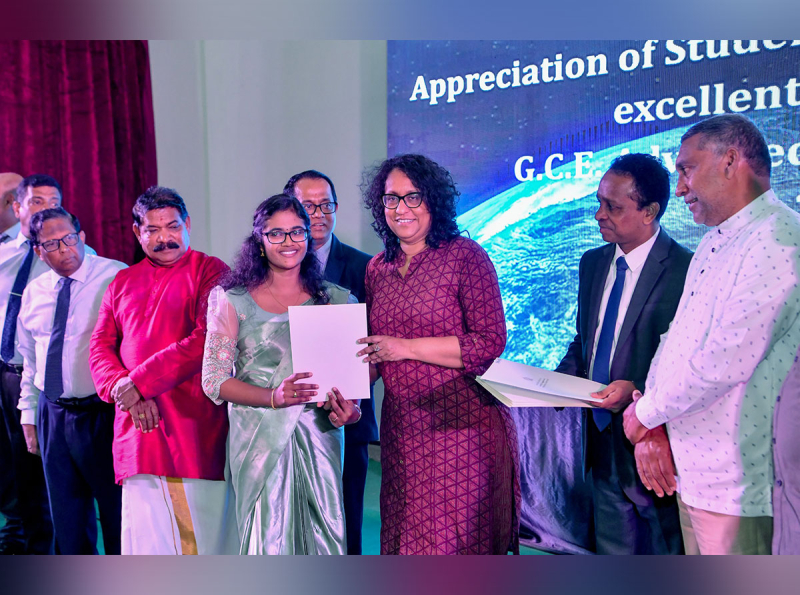
A sum of Rs. 100,000 each will be awarded to 274 students who demonstrated excellence across all subject streams at the GCE Advanced Level examination.
The programme to recognise 3,000 students who achieved outstanding results at the Advanced Level examination across all provinces will be successfully concluded this year.
The Northern Province awards ceremony to recognise district-level top performers of the 2023 and 2024 GCE Advanced Level examinations, implemented through the President’s Fund, was held last Sunday morning (21) at the Nelum Piyasa premises in Kilinochchi under the patronage of Prime Minister Dr. Harini Amarasuriya.
At the event, 274 Advanced Level students from the districts of Vavuniya, Mannar, Mullaitivu, Kilinochchi, and Jaffna were honoured, with each student receiving a financial grant of Rs. 100,000 along with a certificate. A total of Rs. 27.4 million has been allocated by the President’s Fund for this initiative.
This marks the final programme in the series launched at the provincial level across the island. Accordingly, the President’s Fund has recognised 3,000 students who obtained outstanding results at the 2023 and 2024 Advanced Level examinations.
Addressing the gathering, Prime Minister Dr Harini Amarasuriya stated that distinctions between national and provincial schools should be set aside, and that all children in every school across the country must be ensured access to the highest quality of education. She also commended the role played by the President’s Fund, owned by the people, in supporting and strengthening the education of the nation’s children by bringing the Fund closer to the public.
Further expressing her views, Prime Minister Dr. Harini Amarasuriya stated ; The programme to honour outstanding Advanced Level achievers commenced in the Jaffna District, and today it has reached its final stage. Therefore, I am pleased that the concluding ceremony to recognise Advanced Level high achievers is being held with a focus on the Jaffna District. The President’s Fund is a fund that must be used for the benefit of the people, and the present Government has taken steps to bring this fund closer to the public.
We wish to develop the Jaffna District into a centre of education. The Northern Province is home to our people and our children in every district. All these schools are our schools. We must forget the distinction between national and provincial schools. The children in all these schools are our children, and it is essential to ensure their right to access high-quality education.
Therefore, when appointing teachers, effecting transfers, and appointing officers, do not think only of Jaffna. Consider all schools in the other districts as well, and ensure equitable distribution across the board.
You are truly talented individuals. I am confident that those of you here will enter universities and later return to serve the Northern Province. In another three or four years, it will be you who make key decisions concerning the Northern region. At that time, we expect you to intervene with the development of the Northern Province in mind. As a Government, I must state that our interventions today are guided by that very objective of development.
The Speaker Jagath Wickramaratne, Minister of Fisheries, Aquatic and Ocean Resources Ramalingam Chandrasekaran, Senior Additional Secretary to the President and Secretary to the President’s Fund Roshan Gamage also expressed their views on the occasion.
Deputy Minister of Cooperative Development Upali Samarasinha, Members of Parliament Dr S. Sribhavanandarajah and K. Ilankumaran, Northern Province Governor Nagalingam Vethanayahan, Northern Province Chief Secretary Thanuja Murugesan, District Secretaries, state officials of the Northern Province, parents, and students were among those present at the event.