
Sri Lanka faces massive rebuilding challenge
In the pre-dawn haze of November 28, 2025, as Cyclone Ditwah’s eye wall clawed its way ashore near Trincomalee, the people never thought it is going to change the country’s destiny. The Mahaweli River, that ancient lifeline of the island’s heartland, had swollen into a monstrous serpent, its waters churning with debris and fury on this day.
By midday, villages near Trincomalee were a memory swallowed by mudslides, one of countless hamlets erased in what President Anura Kumara Dissanayake would call “the most challenging natural disaster in our history.”
Ditwah was not just a storm; it was a reckoning bitter storm that exposed the fractures in a nation still limping from the 2022 economic collapse. Over the next week, torrential rains with some areas logging 1,200 millimetres in days unleashed floods and landslides that claimed over 600 lives, left 214 missing, and scarred every one of Sri Lanka’s 25 districts.
As the waters recede into the paddy fields and tea estates, the true toll still emerges. The total estimated loss is yet to be assessed, but it would be certainly higher than the 2004 Boxing Day tsunami. This is the story of Ditwah, not merely of wind and wave, but of absence of early warnings, lives upended, and a resilient island forced to rebuild from the rubble.
Warnings whispered, routes abandoned
Ditwah’s genesis was no secret to the meteorologists watching the Bay of Bengal. As early as November 13, the India Meteorological Department (IMD), which monitors the region through its Regional Specialised Meteorological Centre, flagged a low-pressure system Southeast of Sri Lanka, predicting cyclogenesis by November 20. By November 23, three-hourly updates painted a grim picture: a depression intensifying into a cyclonic storm, tracking North-Northwest at 5-14 km/h, poised to slam the Eastern coast with winds up to 90 km/h and rainfall exceeding 500 mm in 24 hours.
Sri Lanka’s Department of Meteorology issued its first bulletin on November 25, classifying the system as a “deep depression” and advising fishermen to stay ashore. A “Red Alert”, the highest level—followed on November 27, covering land and sea, warning of “extremely heavy rainfall and destructive winds.”
But the chain broke here. The cell broadcast system, installed post-2004 tsunami with Japanese aid, lay dormant since 2023 due to lapsed maintenance contracts due to foreign exchange shortages under the IMF bailout deemed it “non-essential.”
Of 116 coastal sirens, 94 were battery-dead, solar panels pilfered for scrap. In Batticaloa and Trincomalee, where the storm first bit, no SMS blared and villagers tuned into Indian channels for scraps of truth.
Preparation was a patchwork of panic. The DMC’s evacuation maps with hazard profiles and shelter lists from post-2017 flood drills gathered dust. Only on November 27 did the authorities convene, mustering 25,000 troops, but fuel rationed for elections left helicopters grounded and boats short.
The A15 highway from Colombo to the East crumbled under landslides before many could flee; the Kelani River bridge at Kolonnawa became a watery grave for dozens of last-minute evacuees. In the Central hills, where landslides would claim the most lives, narrow tea estate roads which are unchanged since colonial days turned into deathtraps, burying buses mid-evacuation.
Many families hunkered in school-turned-shelters across the country as Ditwah made landfall at 2 a.m. on November 28 with winds at 80 km/h, surge waters 4-6 metres high. By dawn, the cyclone had crossed the island, stalling over the Southwest Bay, dumping record rains that swelled every river from the Mahaweli to the Nilwala.
What began as a coastal whisper became a nationwide roar, the “warning-to-action gap” sealing fates in real time.
The extent of devastation
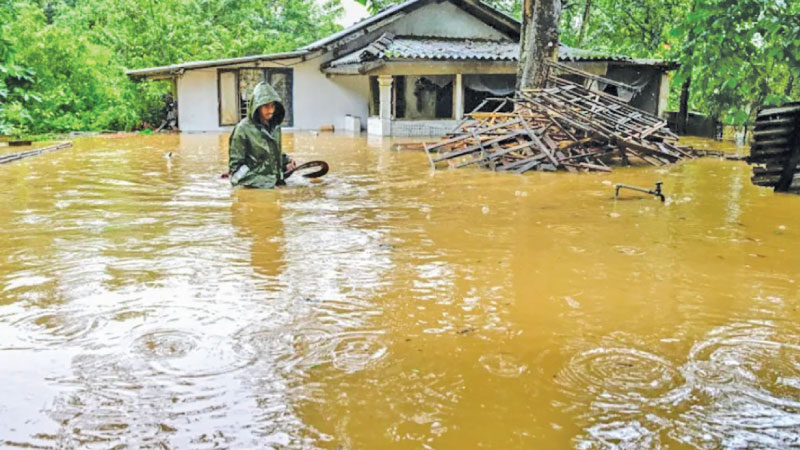
Ditwah’s footprint defies containment as it ravaged all 25 districts, from the surf-lashed East to the mist-shrouded central highlands, submerging Colombo’s urban sprawl and isolating Northern Jaffna. The DMC’s tally, as of December 6, paints a tableau of apocalypse: 607 confirmed deaths, mostly from landslides in Kandy (242), Badulla (89), and Nuwara Eliya (76); 214 missing, presumed lost to the mud; more than two million affected across over 800,000 families. Schools, temples, and community halls turned into temporary shelters with many now straining under secondary floods from unrelenting monsoon tails.
Homes bore the brunt with Central and South-Central provinces hit hardest. In the Gampaha and Colombo suburbs such as Wellampitiya, floodwaters, fuelled by the Kelani’s overflow, reached three metres, turning concrete bungalows into aquariums of silt and sewage.
Satellite imagery from Planet Labs reveals the horror: the Kelani’s basin, Sri Lanka’s fourth-largest river, ballooned 10-fold, engulfing 50 square kilometres of farmland and suburbia.
Infrastructure crumbled like colonial relics. Over 200 roads remain impassable, including the vital Colombo-Kandy corridor and A9 Northern Highway; 10 major bridges collapsed, severing supply lines.
The hill-country railway, which is the lifeline for tea and tourists, lies twisted in 11 breaches, tracks submerged under Badulla’s debris fields. Power outages blacked out a third of the nation with the Ceylon Electricity Board reporting 40 percent grid damage, with Laxapana’s hydro plants choked by silt.
Water systems fared worse: 500,000 households without clean supply, treatment plants in Kurunegala and Matale contaminated, sparking cholera fears. Health facilities witnessed worse damage with 15 hospitals flooded, ground floors of the Trincomalee Base Hospital scoured clean; two infants airlifted from Chilaw’s submerged maternity ward.
Schools in 20 districts shuttered, 150,000 children out of class. Initial audits peg physical damage at $4-7 billion for roads ($1.2B), housing ($800m), rail ($500m) compounding lost output in a GDP already fragile.
Human and societal toll
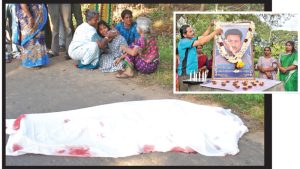
Beyond bricks and beams, Ditwah’s impact pulses through veins of society. The human cost transcends numbers at least 607 souls – farmers buried in tea slopes, urbanites drowned in basements, children swept from playgrounds leaving 214 families in limbo, sifting mud for heirlooms and hope.
Communities fracture along fault lines of vulnerability. Hill-country Tamils and Muslims in Badulla estate workers long marginalised suffered 40 percent of fatalities, their thatched lines no match for mudflows. In Colombo’s lowlands, informal settlements such as Methsara vanished, displacing 50,000 urban poor into camps rife with disease risks with dengue cases up 25 percent amid stagnant pools.
Social fabrics strain under logistics’ weight. With mobile towers down and landlines severed, some families waited days for word, rumours filling voids. Education halts for thousands with school dropouts expected to spike in crisis zones.
Sri Lanka’s breadbasket lies fallow under Ditwah’s deluge, a catastrophe for a nation where 25 percent rely on farming. Over 510,000 hectares of paddy which is nearly a third of the Maha season’s yield submerged or silted, erasing harvests. In Polonnaruwa’s rice bowl, waters laced with salt from breached lagoons poison soils for years; vegetable farms in Gampaha, vital for Colombo’s tables, lost 80 percent of crops, spiking carrot prices to Rs. 3,000/per kg just after the disaster.
Tea estates, the island’s green gold, bleed red. In Nuwara Eliya and Badulla, landslides likely to have buried 20,000 hectares, uprooting bushes and pluckers alike; production, targeted at 400 million kg by 2030, faces a 15-20 percent cut in 2026, slashing at least 20 percent in exports. Irrigation networks including 4,800 minor tanks breached, anicuts shattered and the demand Rs. 15 billion to mend, per Foreign Ministry appeals.
The livestock toll with 149 cattle drowned and millions of poultry flocks decimated is likely to compound protein shortages.
Tourism’s fragile facade
November marks the high season’s dawn in Sri Lanka with beaches beckon, elephants roam Yala, trains chug through Ella’s gaps. Ditwah slammed the gates. Arrivals, cresting two million by mid-month, has stalled with at least 15 flights diverted at Bandaranaike and roads to Kandy and Galle severed. The U$3.2 billion industry which accounts for four percent of GDP and the third foreign exchange earner, faces a hit amid cancellations, though low at one percent, cascade through small operators.
The South coast resorts such as Unawatuna weathered surges but power cuts; hill retreats in Ella, landslide-blocked, echo with silence.
Stranded visitors got visa extensions, waived fees, but perceptions linger with some countries cautioning their citizens with travel advisories. Yet, resilience flickers. The Hotel Association’s Chairman Asoka Hettigoda said: “Low cancellations show faith; we’ll rebound.” In Hikkaduwa, divers pivot to reef cleanups, turning tragedy to eco-tourism. But some boutique hotels in Kandy and Nuwara Eliya will face difficulties in bouncing back
Pre-Ditwah, Sri Lanka eyed 3-4 percent GDP growth in 2025, buoyed by remittances and apparel. Now, analysts have slashed it 0.5-0.7 points, to 2.3-3.5 percent, as disruptions eclipse relief spending. The $6-7 billion tab or 3-5 percent of GDP evaporates reserves, halts factories in export zones, idles 100,000 workers.
There could be bad loans for banks and inflations is expected to rise due to supply shortage.
The 2022 crisis, default on $46 billion debt, 70 percent inflation, fuel queues scarred deep. IMF’s $3 billion bailout stabilised, growth hit five percent in 2024, poverty “doubled” but easing. Ditwah reignites embers: reserves, targeted at US $7 billion end-2025, drain on imports; austerity bites harder amid reconstruction. World Bank’s June 2025 prospects flagged “limited space for shocks” at 99.5 percent debt-to-GDP; now, it’s a chasm
Repayments in the rain
Sri Lanka has to pay US $2.4 billion external debt in 2025, but it may go up after the Ditwah. Reserves, after repaying $1.67 billion 2024 payments, strain under $487 million Q4 obligations; cyclone imports widen deficits. From 2028, $3.2-3.5 billion annually peaks at $4 billion, according to the Central Bank Governor, Dr. Nandalal Weerasinghe — unsustainable sans reforms.
Sri Lanka’s request for IMF’s RFI of $200 million would help to buy time, but haircuts on macro-linked bonds hinge on 2025-27 growth. The underperformance in economic growth means we may face trouble in our debt repayments. India, China, Japan — key backers — must bridge, as President Dissanayake may have to seek fresh restructuring.
Reconstruction’s price tag: $6-7 billion, a decade’s development Budget squeezed into months. Access plagues: ongoing rains slow crews, remote estates unreachable; NBRO warns of over 100 landslide hotspots. Rebuilding fund taps private sector, but IMF austerity caps spending; corruption fears linger from post-2004.Labour shortages is also another concerns Sri Lanka will have to address with over 100,000 displaced workers; materials scarce, and rising.
As December dawns, Sri Lanka stands at the ford: Ditwah’s waters recede, but shadows linger. Many assessments need to be done to realise the reality of the country’s way forward.
Copied : https://www.sundayobserver.lk/2025/12/07/opinion/67922/sri-lanka-faces-massive-rebuilding-challenge/