
People raise voices for ‘Malaiyaha Makkal’ who has been trampled in 200 years
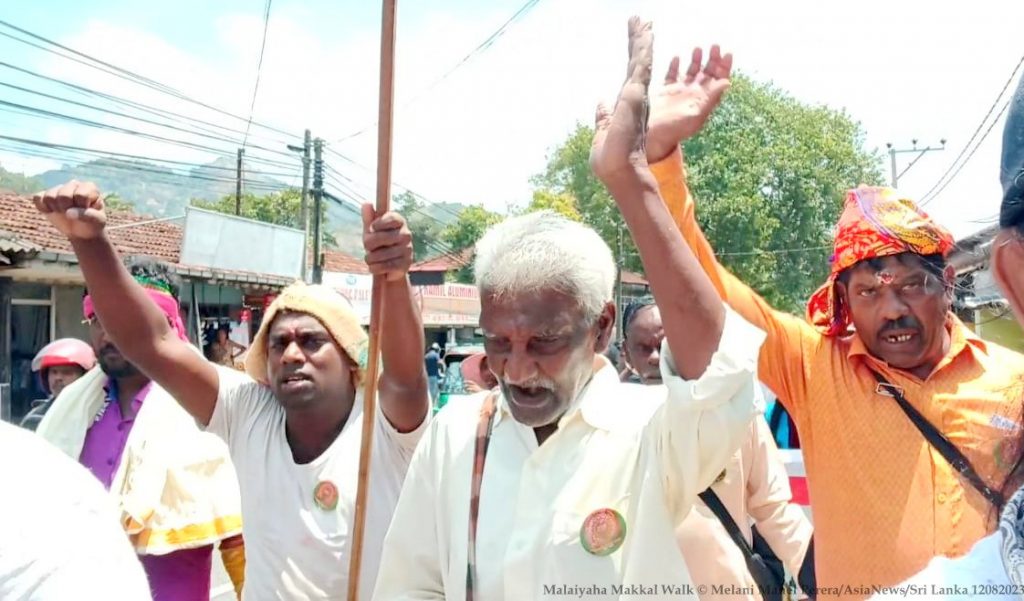
A 15-day-long march started with a very small group of plantation workers, Civil Society representatives, and religious dignitaries and, individuals who are concerning ‘Malaiyaha Makkal’ with the aim of obtaining solutions to the most needed 11 demands of plantation workers in Sri Lanka, ended with a huge crowd and a big pressure on the government and an impression.

Last Saturday, the 12th of August, another significant day of remembrance unfolded, commemorating the enduring history of the Indian-origin Tamils’ arrival in Sri Lanka over two centuries ago. This commemoration took the form of a symbolic padayatra – a journey on foot that retraces the path the Tamil community from South India once embarked upon and ended in Matale on 12 August.
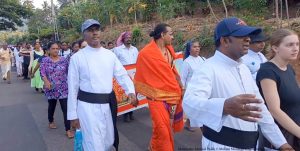 Along the journey, they’ve passed through various communities that have supported and cheered them on. Those participating in the long walk express that their roots have become intertwined with Matale and other parts of the upcountry due to their work on plantations. They reflect on their toil and the need to remember that journey, as their rights are yet to be fully realized. Despite progress, there’s a prevailing sentiment that their past journey still resonates in their ongoing struggle for rights.
“Really sad about the plight of these Malaiyaha communities. Shame on our governments that ruled and which is ruling. We wanted to show our solidarity and power of people to the government. Please attend to the demands of Malaiyaha Makkal.” It was the same statement shared with Mojo News by many of the groups and individuals who joined the last-day march to Matale.
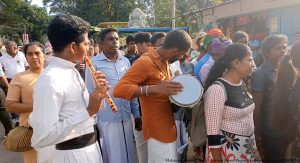 be viewed merely as a community in need of sympathy; we want recognition for our contribution. We were denied access to education, healthcare, and other essential qualifications. We seek greater acknowledgment,” told Mojo News Weerasingham as a member of the co-team of the walk of Malaiyaha Makkal.
Religious leaders and several activists who spoke with Mojo News said that as a country, it is very shameful not to listen to the plantation workers’ plea for such a huge period.
Sister Deepa Fernando, a nun, and Social Justice activist among those taking part in the march, confirms that among the most marginalized and exploited people are the plantation workers, particularly the Malaiyaha, who “have been suffering in our country for 200 years” without any ruler having heeded their cry. “How is it that these communities have not been accepted as citizens” of Sri Lanka the nun asks despite being the “backbone of the national economy”.
 Also, she said that plantation workers may be happy now at least they can see that some people are standing on their behalf in this difficult walk for their rights.
“We urge the government to at least now please listen to the cry of these people and make them live with the dignity of humans. They are not slavers.” Said Sister Deepa.
“We are also descended from them. There was nothing our people have been given for these 200 years. We invite the President to come and stay in our estate then you yourself can experience the bitter truth. How is the plight of people?”
Kurukkal Somasundaram said that plantation workers that provide maximum economic benefit should be given more responsible attention. They are asking for 20 perches of land, a place to stay, a permanent address, recognition as a part of Sri Lanka’s population, and so on”, he said.
“So we urge today, this government immediately attend to these demands of Plantation workers who are our brothers and sisters. Give them their prime rights. Give them a proper salary and make the background to live with dignity as Sri Lankans in our country.” Ven. Dhammathilake Thero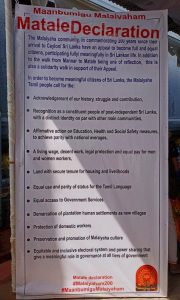 said.
said.
“This is a chance to show solidarity. Therefore I participated in this whole journey. I hope and wish that they will get their freedom and respect on this island.” said Rev. Sri Jude Vinothan.
The current economic crisis has most severely affected the people who continue to work on the plantations in support of whom the march took place. Their struggle for a paltry wage of Rs 1000 per day commenced before the Covid pandemic weakened the national economy. However, the work on tea plantations continued as the government curfews that sought to restrict the spread of the virus were not applied to the agricultural sector. When the plantation workers finally got the Rs 1000 per day wage in 2021 after more than five years of struggle it real value was devalued by inflation. In addition, various conditions were attached to it, such as working for a minimum number of days and plucking a minimum number of kilos of tea in order to get the full amount.
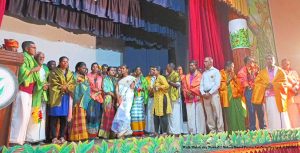
The 15-day march ended with a commemoration including an exhibition, felicitation of all the members who marched for 15 days, and declaring the ‘Matale Declaration’ in which their 11-point demands are reiterated, held at Sri Muttumariamman Kovil in Matale.